Travis C Sayre
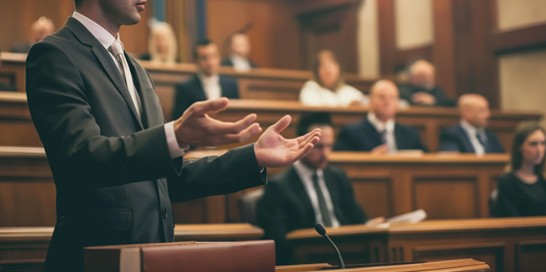
In today’s complex legal landscape, effective advocacy requires both a deep understanding of the law and the ability to adapt to an ever-changing world. From defending individuals facing serious criminal charges to helping veterans navigate the often-complicated disability claims process, attorneys must balance legal knowledge, strategic thinking, and a steadfast commitment to protecting the rights of those they represent. As technology reshapes criminal investigations and legal proceedings alike, the role of a dedicated trial lawyer has never been more important. Through courtroom experience, ongoing professional development, and a focus on safeguarding constitutional rights, attorneys like Travis C. Sayre work to ensure that every client receives strong, thoughtful representation when it matters most.
About Travis Sayre
Travis C. Sayre is an experienced trial lawyer whose legal practice centers on criminal defense and advocacy for military veterans. Recognized for his commanding courtroom presence and thoughtful litigation strategies, Travis represents clients confronting complex and often life-altering legal matters throughout West Virginia and across the United States. His work is defined by a deep sense of responsibility to those he serves and a determination to defend their rights with diligence and integrity.
Travis C. Sayre began his academic journey at West Virginia University at Parkersburg, where he earned a Bachelor of Science in Business Administration in May 2006. He later pursued his legal education at the West Virginia University College of Law, graduating with his Juris Doctor in May 2011. While attending law school, Travis was actively involved in the Marlyn E. Lugar Trial Association, an experience that helped sharpen his advocacy abilities and introduced him to the rigorous demands of trial litigation. Through this involvement, he developed the foundational courtroom skills that would later shape his career as a trial attorney.
Dedicated to refining his craft and continually improving his abilities as an advocate, Travis has pursued advanced training through some of the nation’s most respected trial programs. In 2023, he completed the intensive program at the National Criminal Defense College, an institution known for strengthening the skills of attorneys committed to defending individuals accused of crimes. Two years later, in 2025, he graduated from the Trial Lawyers College, a prestigious organization focused on elevating the art of trial advocacy through immersive training and mentorship. Participation in these programs reflects Travis’s commitment to mastering courtroom practice and delivering the strongest possible representation for his clients.
Travis C. Sayre maintains an active membership in several professional organizations that support excellence in legal advocacy. He is a member of the National Association of Criminal Defense Lawyers and the National Association of Veterans Advocates, organizations that bring together attorneys dedicated to protecting constitutional rights and assisting veterans in navigating complex legal systems. In addition to his legal practice, Travis contributes to the professional development of fellow attorneys as a faculty member for the National Business Institute, where he teaches continuing legal education programs and shares practical insights gained through years of trial experience.
Within his criminal defense practice, Travis Sayre handles a broad spectrum of cases ranging from misdemeanors to serious felony charges across West Virginia. His work has included defending individuals accused of offenses such as drug trafficking, homicide, violent crimes, sexual offenses, driving under the influence, and various traffic violations. He also represents clients in sensitive and highly consequential cases involving abuse and neglect, child neglect, and child abuse allegations. Travis has successfully represented clients in numerous jury trials, including complex cases involving serious charges. His experience in these high-stakes courtroom environments has strengthened his reputation as a capable and determined advocate who is prepared to defend his clients when the stakes are highest.
Beyond criminal defense, Travis devotes a significant portion of his practice to representing veterans seeking disability benefits through the U.S. Department of Veterans Affairs. Veterans often face complicated administrative procedures and lengthy appeals processes when pursuing the benefits they earned through military service. Travis works with veterans across the country to help them navigate these challenges, advocating for their rights and guiding them through each stage of the claims and appeals system with care and persistence. His work in this area reflects a deep respect for those who have served and a commitment to ensuring they receive the support they deserve.
Outside of his legal career, Travis C. Sayre pursues personal interests that demand the same discipline and resilience he brings to his professional life. He holds the rank of third-degree black belt in Judo, a distinction achieved through years of training, dedication, and mental focus. The principles of perseverance, strategy, and composure that define martial arts mirror the qualities that guide his approach to litigation.
Through years of experience, advanced training, and an unwavering dedication to those he represents, Travis C. Sayre has established himself as a formidable advocate. Whether standing before a jury in a criminal trial or assisting a veteran in securing long-awaited benefits, he approaches every case with determination, preparation, and a steadfast commitment to justice.
Travis Sayre Highlights Protecting the Rights of the Accused in the Digital Age
The rapid advancement of technology has transformed nearly every aspect of modern life, including the way criminal investigations are conducted and prosecuted. Today, law enforcement agencies have access to powerful digital tools that allow them to collect and analyze vast amounts of information—from surveillance footage and social media activity to cell phone records and GPS data. While these tools can help investigators piece together events and identify suspects, they also raise important questions about privacy, accuracy, and the protection of constitutional rights.
For individuals accused of a crime, the increasing role of digital evidence in criminal cases presents both challenges and opportunities. Technology can strengthen the prosecution’s case, but it can also reveal inconsistencies, raise questions about investigative methods, and provide critical evidence in a person’s defense. In this evolving legal landscape, Travis Sayre emphasizes that protecting the rights of the accused requires careful examination of how digital evidence is obtained, interpreted, and presented in court.
The Expanding Role of Digital Evidence
In the past, criminal investigations relied heavily on eyewitness testimony, physical evidence, and traditional investigative techniques. Today, digital information often plays a central role in determining what happened and who may be responsible.
Cell phones, for example, have become one of the most common sources of evidence in criminal cases. Investigators frequently analyze call logs, text messages, app activity, and location data to establish timelines or place individuals at specific locations. GPS information embedded in phones, vehicles, and wearable devices can provide investigators with detailed records of a person’s movements.
Similarly, surveillance technology has become increasingly widespread. Security cameras installed in businesses, homes, and public spaces capture video footage that can be used to identify suspects or reconstruct events. Traffic cameras, doorbell cameras, and even dash cameras in vehicles can provide investigators with visual evidence that was rarely available in earlier decades.
Social media platforms have also emerged as a major source of digital evidence. Posts, messages, photographs, and online interactions can be examined for clues about relationships, intentions, or alleged criminal activity. In some cases, social media content has played a key role in criminal prosecutions.
Travis Sayre understands that while these forms of digital evidence can be useful investigative tools, they also introduce new complexities that must be carefully addressed in court.
The Importance of Constitutional Protections
The United States Constitution guarantees certain protections that apply to individuals accused of crimes, including the right to privacy, protection from unreasonable searches and seizures, and the right to due process of law. As technology evolves, courts must continually interpret how these protections apply in the digital world.
One of the most significant legal issues surrounding digital evidence involves the Fourth Amendment, which protects individuals from unreasonable searches and seizures by the government. In traditional contexts, law enforcement generally must obtain a warrant before searching someone’s home or personal property. However, the question of how this principle applies to digital information has been the subject of ongoing legal debate.
Courts have increasingly recognized that digital devices such as smartphones contain vast amounts of personal information, often revealing far more about an individual’s life than physical documents or possessions. As a result, the U.S. Supreme Court has ruled in several cases that law enforcement must obtain a warrant before searching the digital contents of a cell phone in most circumstances.
Travis C. Sayre understands that these decisions highlight the importance of ensuring that technological capabilities do not outpace the legal protections designed to safeguard individual rights.
Challenges in Interpreting Digital Evidence
Although digital evidence can appear highly persuasive, it is not always as straightforward as it may seem. In many cases, interpreting digital data requires advanced expertise and careful analysis.
For example, cell phone location data may indicate that a device was in a general area at a particular time, but it does not always prove exactly where a person was standing or what they were doing. Similarly, surveillance footage may capture part of an event but fail to show important context or details that occurred outside the camera’s field of view.
Digital evidence can also be vulnerable to misinterpretation. Metadata, timestamps, and location information may be affected by technical factors such as time zone settings, software errors, or device malfunctions. Without careful analysis, these technical nuances can lead to inaccurate conclusions.
Another issue involves the potential for incomplete or selective evidence. Investigators may obtain certain digital records while overlooking others that could provide additional context or raise questions about the prosecution’s narrative. Ensuring that all relevant information is properly examined is essential for maintaining fairness in the legal process.
The Role of Defense Attorneys in the Digital Era
As technology becomes more deeply integrated into criminal investigations, defense attorneys must develop the knowledge and resources necessary to evaluate digital evidence effectively. Travis Sayre explains that this often involves working with forensic experts who analyze electronic data, computer systems, and digital communications.
These experts can help determine whether evidence was collected lawfully, whether data has been altered or misinterpreted, and whether technical explanations exist that may contradict the prosecution’s claims. In some cases, independent forensic analysis can uncover information that supports the defense or raises reasonable doubt.
Defense attorneys also play a critical role in ensuring that investigators follow proper procedures when obtaining digital evidence. If law enforcement collects information without the appropriate legal authorization, such as a warrant or valid consent, the evidence may be subject to challenge in court. Travis Sayre explains that by scrutinizing the methods used to gather digital data, defense counsel helps protect the constitutional safeguards that are fundamental to the justice system.
Balancing Technology and Justice
Technology has undeniably changed the way criminal cases are investigated and litigated. Digital evidence can provide powerful insights into events that might otherwise remain unclear. At the same time, it has introduced new legal questions and technical complexities that must be carefully addressed.
The challenge for courts, attorneys, and policymakers is to ensure that technological advancements enhance the pursuit of truth without undermining the rights guaranteed by the Constitution. Protecting the rights of the accused is not merely a procedural requirement; it is a cornerstone of a fair and balanced justice system.
Travis Sayre emphasizes that as the digital landscape continues to evolve, the legal system must remain vigilant in safeguarding due process and ensuring that evidence, no matter how technologically sophisticated, is examined with fairness, accuracy, and respect for individual rights. Only by maintaining this balance can the justice system adapt to modern realities while preserving the principles that define it.