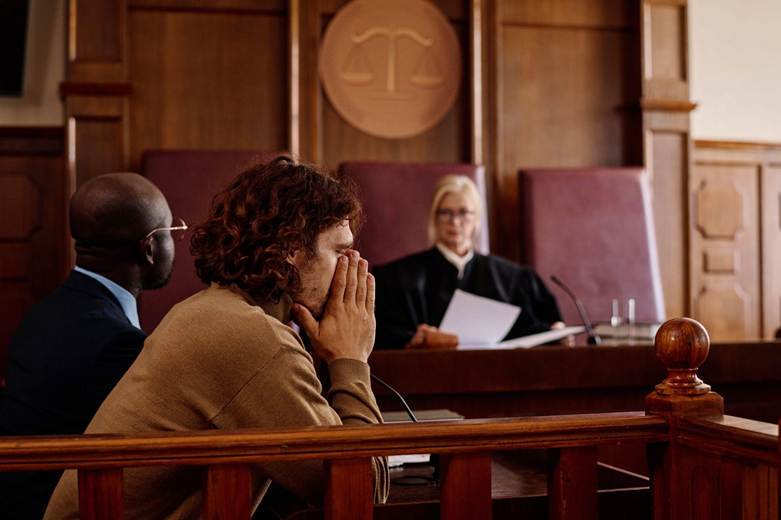
In high-stakes litigation, Travis Sayre emphasizes that the outcome of a trial is not shaped only by the evidence presented but also by the impressions formed long before that evidence is fully understood. The first moments inside a courtroom often establish a narrative framework that influences how everything that follows is interpreted.
This process is subtle, rapid, and largely unconscious.
Before opening statements unfold in detail and before witnesses take the stand, jurors are already beginning to organize information into a story. These early impressions do not rely on facts alone. Instead, they are shaped by tone, presence, sequencing, and perceived credibility.
- Who appears prepared
- Who seems controlled under pressure
- Who communicates with clarity
- Who appears aligned or misaligned with the situation
These cues form the starting point of a narrative. Once that narrative begins to take shape, it becomes difficult to dislodge.
Why the Brain Builds Stories Before It Evaluates Facts
Human cognition is designed to prioritize efficiency. Faced with complex information, the brain does not wait for full evidence before forming conclusions. Instead, it creates a working model, a preliminary story that helps organize incoming details.
This is particularly relevant in a courtroom, where jurors are exposed to:
- Large volumes of unfamiliar information
- Conflicting interpretations of events
- Emotional and moral complexity
- Time constraints on processing
To manage this, the brain begins by asking a simpler question: What is happening here?
The answer to that question is rarely based on evidence alone. It is influenced by immediate perception.
- Body language
- Vocal tone
- Confidence and pacing
- Interaction dynamics
These elements provide the raw material for early judgment. Once a narrative begins to form, new information is filtered through it.
The Concept of Thin-Slice Judgments in the Courtroom
Psychological research often refers to rapid decision-making as “thin-slice judgment,” the ability to form impressions based on very brief observations. In a courtroom setting, these judgments can occur within seconds.
Jurors are not evaluating legal arguments at this stage. They are assessing people.
- Does the speaker seem trustworthy?
- Is the delivery controlled or reactive?
- Does the presentation feel coherent or fragmented?
These initial perceptions create a baseline. From that point forward, evidence is not evaluated in isolation; it is interpreted in context.
This is why two identical pieces of evidence can be perceived differently depending on who presents them and how.
The First 90 Seconds: What Jurors Are Actually Noticing
While attention may appear focused on formal proceedings, jurors are absorbing far more than the spoken word. The early phase of a trial is rich with signals that influence perception.
Key elements that shape early impressions include:
- Physical presence – posture, movement, and composure
- Vocal delivery – clarity, pacing, and emotional control
- Organization – whether ideas are introduced in a structured way
- Responsiveness – how quickly and effectively unexpected moments are handled
These elements combine to answer an unspoken question: can this person be trusted to guide understanding?
If the answer is uncertain, skepticism begins early. If the answer is affirmative, credibility builds before evidence is even introduced.
Narrative Formation and Confirmation Bias
Once an initial narrative is formed, the brain begins to look for confirmation. This is not a conscious decision but a natural cognitive tendency.
- Information that aligns with the narrative is accepted more easily
- Information that contradicts it is scrutinized more heavily
- Ambiguous details are interpreted in a way that supports the existing story
This process, often referred to as confirmation bias, reinforces early impressions.
In a trial setting, this means that the first narrative jurors adopt can shape how they interpret:
- Witness credibility
- Contradictions in testimony
- The significance of evidence
- The overall coherence of each side’s case
Changing that narrative later requires significantly more effort than shaping it early.
Why Early Moments Carry Disproportionate Weight
The importance of the first 90 seconds lies not in the amount of information conveyed, but in the direction it establishes.
These early moments:
- Set expectations for how information will be delivered
- Establish a tone for the entire proceeding
- Signal competence, control, and clarity
- Influence emotional alignment
Once these elements are in place, they create a framework that guides interpretation.
Later arguments may introduce stronger evidence, but they must operate within the structure already formed.
The Role of Nonverbal Communication
A significant portion of early perception is shaped by nonverbal cues. These signals are processed quickly and often carry more weight than verbal content in initial judgments.
Critical nonverbal factors include:
- Eye contact and focus
- Controlled movement versus distraction
- Consistency between expression and message
- Physical stillness during key moments
These elements communicate confidence and stability. When aligned, they reinforce credibility. When misaligned, they introduce doubt, even if the content itself is strong.
Clarity Over Complexity in Early Communication
In the opening moments of a trial, clarity is more effective than depth. Jurors are not yet ready to process detailed arguments. They are forming an initial understanding of the situation.
Overloading this moment with complexity can create confusion, which weakens narrative formation.
Instead, early communication benefits from:
- Clear structure
- Simple framing
- Logical progression
- Measured pacing
This allows jurors to anchor themselves before engaging with more detailed information later.
Emotional Tone and Its Lasting Impact
Emotion plays a subtle but significant role in early perception. The tone set at the start affects jurors’ feelings about the case, not just their thoughts.
- Controlled delivery suggests confidence and reliability
- Excessive intensity may be perceived as instability
- Detachment can be interpreted as lack of engagement
The goal is not to eliminate emotion but to align it with the context of the case.
When emotional tone matches the situation, it reinforces authenticity. When it does not, it creates distance.
Reframing the Idea of “Starting Strong”
Starting strong is often misunderstood as being forceful or persuasive from the outset. In reality, strength in the early moments of a trial is defined by control, clarity, and coherence.
- Control over pacing and delivery
- Clarity in framing the situation
- Coherence in how ideas are introduced
These elements do not overwhelm the audience. They guide it.
This approach allows jurors to form a narrative that is stable, logical, and receptive to further development.
Why Early Narrative Control Shapes Outcomes
The first narrative established in a trial often becomes the lens through which all subsequent information is viewed. This does not mean that outcomes are predetermined, but it does mean that direction matters.
- A clear early narrative reduces confusion
- A coherent framework improves retention
- A stable impression increases trust
When these factors are present, later arguments are more likely to be understood and accepted.
When they are absent, even strong evidence can struggle to gain traction.
Final Reflection: The Moment Before the Case Begins
Trials are often thought of as battles of evidence and argument. While these elements are essential, they do not operate in isolation.
Before the case fully unfolds, a quieter process takes place. Jurors observe, interpret, and begin to form a story.
It happens quickly.
- A first impression of control or uncertainty
- A sense of clarity or confusion
- An early decision about credibility
These moments do not determine the outcome on their own. But they shape the path the trial will follow. And in that path, the first 90 seconds matter more than they appear.
Disclaimer: Results are never guaranteed.